Quitclaim Deed Forms and Instructions for Every State
A quitclaim deed — often searched as a “quitdeed” or a “quit claim deed” — transfers whatever ownership interest you hold in a piece of real estate to someone else.
It is one of the fastest and simplest ways to move title between people who already know and trust each other. The real legal term is “quitclaim deed”, not just quitdeed, and that is the wording a county recorder will expect to see.
QuitDeed.com provides general information, not legal advice. For advice about your own situation, consult a licensed attorney in your state.
When a quitclaim deed is the right tool
Quitclaim deeds are used most often when the parties already have a relationship and no money is changing hands in a traditional sale:
- Divorce. One spouse transfers their interest in the home to the ex-spouse, quickly and without a closing.
- Family transfers. Passing property between parents, children or siblings.
- Adding or removing a name on the title. For example, adding a new spouse to the deed.
- Moving property into a trust or an LLC that you control.
Because a quitclaim deed makes no promises about the condition of the title, it is generally the wrong tool for selling property to a stranger — that is what a warranty deed is for.
Warning: a quitclaim deed does NOT remove your mortgage
If the thought of foreclosure is on your mind, read this section before anything else. Here’s why:
There is a misconception floating around that needs to be addressed — that if you are close to losing your home because you are behind on payments, using a quitclaim deed will free you of your loan obligation.
This notion is FALSE. Do not believe anyone that tells you that “you will be free of your mortgage or loan obligation if you quitclaim your property.”
A quitclaim deed transfers ownership — it does not touch the loan. If you were one of the original signers on the contract for the loan, the lender will still hold you responsible for satisfying that obligation. Therefore, do NOT use this process if you intend to be free of the loan obligation.
This also applies to transferring your ownership to a spouse that you just divorced. You can assign the ownership rights, but if you signed the original loan document you are still on the hook for that loan until it is paid off or refinanced.
How the process works: three steps
- Complete the correct form. Obtain a blank quitclaim deed that meets your state’s requirements and fill it out with the legal description of the property and the full names of the parties — the grantor and the grantee.
- Sign before a notary. Take the completed deed to a Notary Public and have all required signatures validated. Some states also require witnesses.
- Record the deed. File the signed, notarized document with the county recorder’s office in the county where the property is located.
One caution before you start: each state — and sometimes each county — has its own wording and formatting requirements. A form written for the wrong state can be rejected by the county recorder.
Get the right form for your state
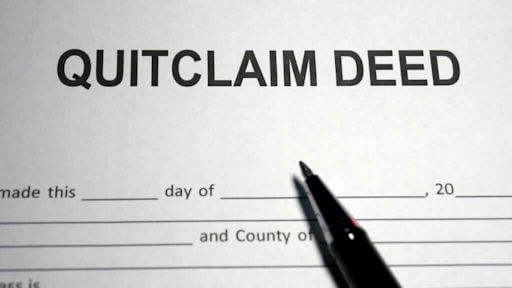
State-specific quitclaim deed forms with clear step-by-step instructions for completing the document yourself.
See the state-specific requirements → Each state words these documents differently, and a form that is wrong for your state can be rejected by the county recorder.